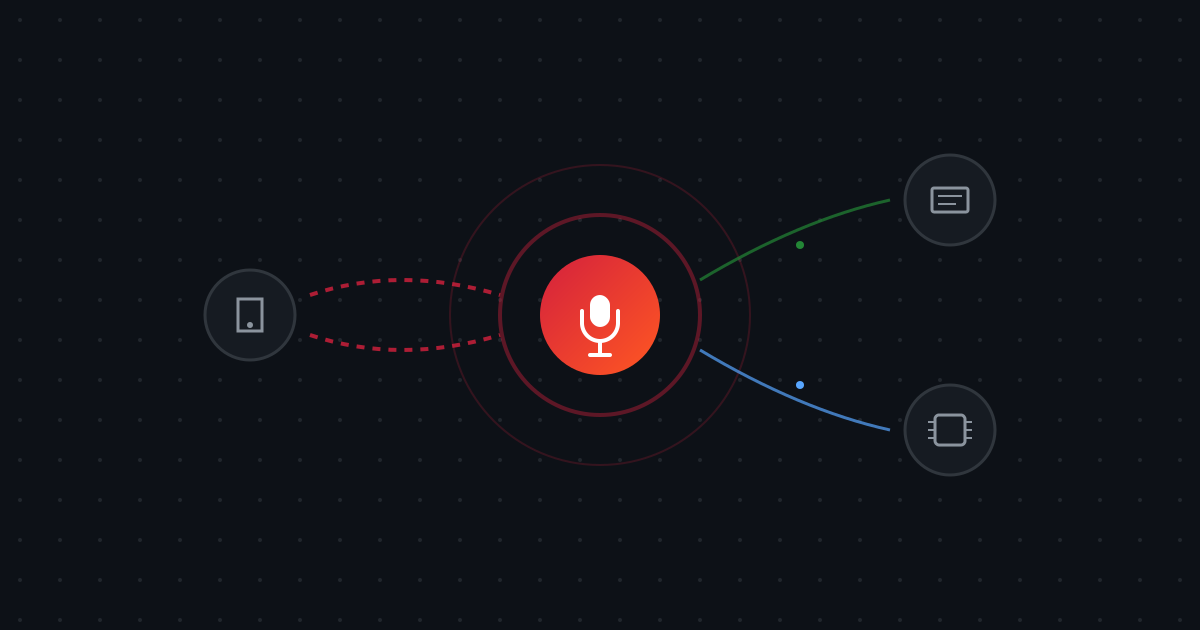
Project Overview
RoboRingo wanted to modernize their traditional keypad-based IVR by introducing human-like, real-time conversational AI. The system needed ultra-low latency voice processing, the ability to dynamically fetch answers from external client knowledge bases, and the intelligence to interface with their existing, highly complex call routing engine to transfer calls to human agents based on user intent.
LiveKit WebRTC Integration
Implemented LiveKit as the core WebRTC audio infrastructure for bidirectional, low-latency voice streaming.
Optimized Voice AI Pipeline
Orchestrated a fast AI pipeline connecting LiveKit to Speech-to-Text (STT), an LLM optimized for speed, and Text-to-Speech (TTS).
Have a similar challenge?
Our experts can help you build custom integrations and plugins tailored to your business workflows.
Dynamic RAG Knowledge Base
Integrated a RAG pipeline utilizing vector databases to allow the AI to fetch accurate, client-specific answers in milliseconds.
Custom Call Routing Webhooks
Developed a robust custom webhook layer enabling the AI to evaluate user intent and trigger RoboRingo's complex call routing rules instantly.
Key Challenges
Challenge 1
RoboRingo required a transition from traditional keypad-based IVR to a natural, human-like Voice AI system.
Challenge 2
Achieving ultra-low latency was critical; conversational AI feels unnatural if response times exceed 1 second.
Challenge 3
The AI needed to dynamically access client-specific knowledge bases (RAG) during active phone calls.
Challenge 4
The new system had to interface perfectly with RoboRingo's highly complex, legacy call routing engine.