

 MetaDesign Solutions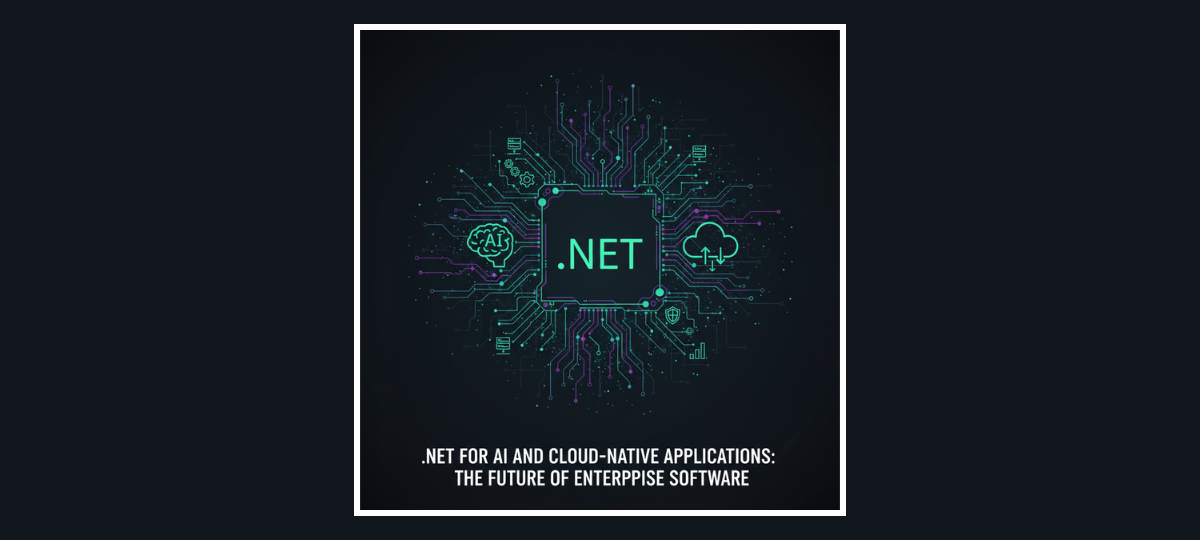

Enterprise software is undergoing a fundamental transformation. In 2026, businesses are no longer building static applications — they are developing intelligent, scalable, and cloud-native systems powered by artificial intelligence and distributed architectures.
At the center of this evolution stands .NET.
Once considered a traditional enterprise framework, .NET has evolved into a powerful, open-source, cross-platform ecosystem capable of supporting AI-driven applications, cloud-native development, and microservices architecture at global scale.
This article explores why .NET for AI and cloud-native applications is shaping the future of enterprise software — and why organizations continue to invest in .NET development services for next-generation platforms.
The Rise of AI-Powered Enterprise Applications
Modern enterprises are embedding AI into core systems for:
- Predictive analytics
- Intelligent automation
- Fraud detection
- Recommendation engines
- Conversational AI systems
- Real-time decision-making
To support these capabilities, organizations need backend systems that are scalable, secure, and capable of processing large volumes of data efficiently.
This is where .NET for AI applications becomes highly relevant.
With frameworks like ML.NET, integration capabilities with Azure AI services, and support for external AI APIs, .NET enables enterprises to incorporate machine learning and artificial intelligence directly into enterprise workflows.
Cloud-Native Development: The Foundation of Modern Software
In 2026, cloud-native development is not optional — it is essential.
Cloud-native applications are built to run in:
- Containerized environments
- Kubernetes clusters
- Distributed microservices ecosystems
- Multi-cloud infrastructures
ASP.NET Core was designed with cloud-first architecture in mind. Its lightweight runtime, cross-platform compatibility, and seamless integration with Docker and Kubernetes make it ideal for cloud-native deployment.
Enterprises leveraging cloud-native .NET development services benefit from:
- Horizontal scalability
- High availability
- Faster deployment cycles
- Improved fault tolerance
- CI/CD automation readiness
This makes .NET a strong foundation for scalable enterprise platforms.
Why .NET Is Ideal for AI Integration
AI workloads require high-performance backend systems capable of handling data pipelines, inference models, and API-driven services.
.NET supports AI development through:
ML.NET, Microsoft’s machine learning framework for .NET developers, enabling model training and inference directly within C# applications.
Integration with Azure Cognitive Services, allowing developers to incorporate vision AI, language processing, speech recognition, and generative AI capabilities.
Seamless API integration with third-party AI platforms such as OpenAI and other LLM providers.
Efficient data processing pipelines using asynchronous programming and optimized memory management.
This allows enterprises to build intelligent systems without abandoning their existing .NET ecosystem.
Microservices Architecture with .NET
Modern enterprise applications are increasingly built using microservices architecture.
Rather than deploying monolithic systems, organizations now design modular services that:
- Operate independently
- Scale independently
- Deploy independently
- Communicate via APIs
ASP.NET Core enables robust .NET microservices development, with support for:
- RESTful APIs
- gRPC services
- Event-driven messaging
- Distributed caching
- Service orchestration with Kubernetes
When combined with DevOps pipelines, this architecture accelerates innovation while maintaining system resilience.

Power the Future with .NET for AI and Cloud-Native Innovation
Ready to modernize your enterprise software? Discover how .NET enables intelligent, cloud-native applications that drive scalability, performance, and long-term digital transformation.
Performance and Scalability for Enterprise Workloads
AI-driven and cloud-native systems require performance at scale.
ASP.NET Core consistently ranks among the fastest web frameworks in benchmark tests. Its Kestrel web server, efficient request pipeline, and asynchronous programming model allow applications to handle high concurrency with minimal latency.
For enterprises managing:
- Millions of API requests
- Real-time analytics
- Data-intensive AI processing
- High-traffic SaaS platforms
.NET provides the performance foundation needed for sustained growth.
Secure Enterprise Architecture
Security remains a critical factor in enterprise software development.
.NET provides:
- Built-in authentication and authorization
- Identity management
- Secure API token handling
- Role-based access control
- Data encryption support
For industries such as healthcare, fintech, and enterprise SaaS, secure cloud-native architecture is non-negotiable.
.NET ensures AI-driven and distributed systems remain compliant and protected.
DevOps and CI/CD Integration
AI and cloud-native systems demand rapid iteration and automated deployment pipelines.
.NET integrates seamlessly with:
- Azure DevOps
- GitHub Actions
- CI/CD pipelines
- Docker containers
- Kubernetes orchestration
This enables organizations to adopt continuous delivery while maintaining stability.
DevOps-ready .NET architecture ensures faster feature releases without sacrificing reliability.
Real-World Enterprise Use Cases
Enterprises are leveraging .NET for AI and cloud-native systems across industries.
In fintech, .NET powers fraud detection engines and transaction analytics platforms.
In healthcare, AI-driven diagnostic support systems run on secure .NET backends.
In SaaS platforms, cloud-native ASP.NET Core microservices handle multi-tenant architectures.
In retail, AI-powered recommendation systems integrate with scalable .NET APIs.
The versatility of .NET allows enterprises to unify AI, APIs, cloud deployment, and enterprise-grade security within a single ecosystem.
Why Enterprises Continue to Hire .NET Developers
The future of enterprise software depends not just on technology but on execution.
Organizations scaling AI-driven platforms often choose to hire dedicated .NET developers or leverage IT staff augmentation services to accelerate innovation.
Experienced .NET developers bring:
Deep expertise in ASP.NET Core
Cloud-native architecture experience
AI integration capabilities
DevOps automation knowledge
Secure enterprise coding practices
For companies building next-generation enterprise platforms, skilled .NET engineers are critical to success.
The Future of .NET in Enterprise Software
As AI adoption accelerates and cloud-native systems become the standard, .NET continues to evolve.
With improved runtime performance, enhanced minimal APIs, expanded AI tooling, and deeper cloud integration, .NET is positioned as a future-ready platform.
The convergence of:
AI-driven intelligence
Microservices architecture
Cloud-native scalability
DevOps automation
Enterprise security
Makes .NET one of the most complete enterprise development ecosystems available in 2026.
Final Thoughts
The future of enterprise software is intelligent, distributed, scalable, and cloud-native.
.NET has evolved to meet these demands head-on.
From AI-powered applications using ML.NET to containerized microservices deployed on Kubernetes, .NET empowers enterprises to build secure, scalable, and future-ready digital platforms.
In 2026 and beyond, .NET is not just relevant — it is foundational to the next era of enterprise innovation.
Related Hashtags:
#DotNetDevelopment#AIDevelopment#CloudNative #ASPNetCore #EnterpriseSoftware #MicroservicesArchitecture #ScalableApplications #Azure #Kubernetes #MetaDesignSolutions