

 MetaDesign Solutions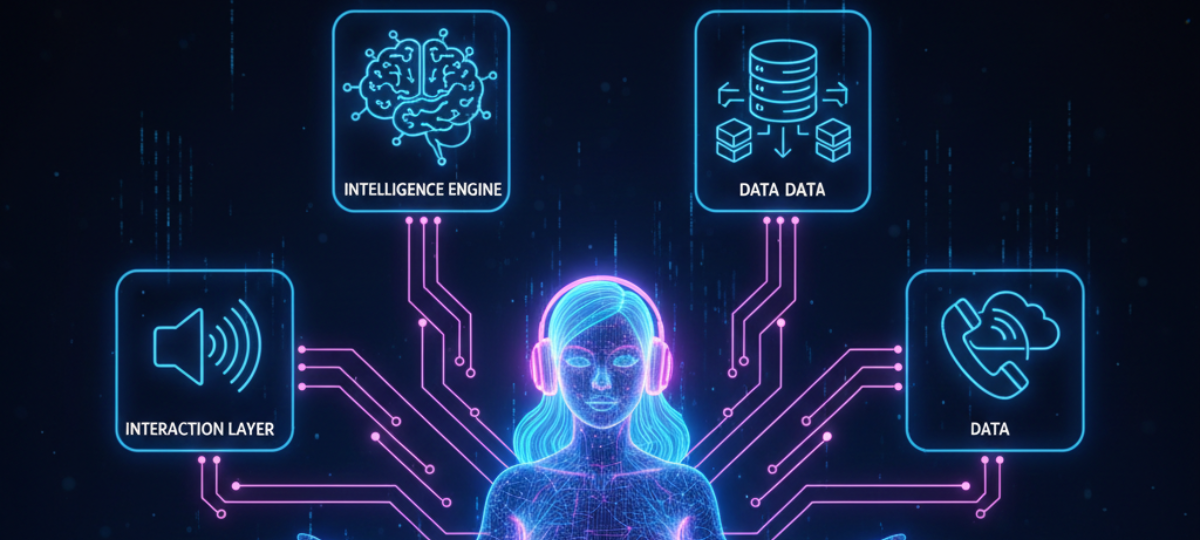

Customer expectations have changed dramatically. In 2026, businesses are expected to respond instantly, operate 24/7, and provide seamless call handling without long wait times. Hiring large front-desk or call center teams is costly and difficult to scale.
This is where an AI receptionist becomes a strategic asset.
An AI receptionist is a voice-enabled conversational AI system that answers calls, understands customer intent, routes inquiries, books appointments, and integrates with backend systems — all automatically.
This guide explains how to build an AI receptionist for your business, including architecture, technologies, integrations, and best practices.
What Is an AI Receptionist?
An AI receptionist is a voice-based virtual assistant powered by:
- Natural Language Processing (NLP)
- Speech-to-Text (STT) technology
- Text-to-Speech (TTS) engines
- Large Language Models (LLMs)
- Workflow automation systems
Unlike traditional IVR systems that rely on “Press 1, Press 2” menus, AI receptionists understand natural language and conduct dynamic conversations.
They can:
- Answer inbound calls
- Route calls intelligently
- Book appointments
- Capture leads
- Answer FAQs
- Transfer to human agents
- Trigger CRM workflows
Step 1: Define Your Business Use Case
Before building an AI receptionist, clearly define what you want it to handle.
Common use cases include:
- Appointment scheduling
- Lead qualification
- Customer support automation
- Order status inquiries
- FAQ handling
- Call routing to departments
For example, a healthcare clinic may focus on appointment scheduling, while a real estate agency may prioritize lead capture and inquiry routing.
Clarity in scope ensures focused development.
Step 2: Design the Conversation Flow
Even though generative AI allows flexible conversations, you must design structured workflows.
Define:
- Greeting message
- Intent recognition scenarios
- Escalation rules
- Data collection requirements
- Integration triggers
Modern AI receptionists combine LLM-powered flexibility with workflow orchestration logic to ensure accurate and controlled automation.
This hybrid approach balances intelligence and reliability.
Step 3: Choose the Right Technology Stack
Building an enterprise-grade AI receptionist requires multiple technology components.
1. Speech Recognition (STT)
Converts voice into text.
2. Natural Language Understanding (NLU)
Identifies user intent and extracts entities such as names, dates, phone numbers.
3. Large Language Models (LLMs)
Generate contextual responses dynamically.
4. Text-to-Speech (TTS)
Converts AI-generated responses back into human-like voice.
5. Workflow Engine
Triggers actions like booking appointments or updating CRM systems.
6. Telephony Integration
Connects the AI system with VoIP providers or cloud communication platforms.
Step 4: Integrate with Business Systems
An AI receptionist becomes powerful when connected to enterprise tools such as:
- CRM systems (Salesforce, Dynamics)
- Calendar platforms (Google Calendar, Outlook)
- Helpdesk software
- ERP systems
- Lead management platforms
For example, when a caller books an appointment, the AI should automatically update your scheduling system and send confirmation messages.
This turns conversational AI into operational automation.
Step 5: Implement Retrieval-Augmented Generation (RAG)
To ensure accurate answers, integrate Retrieval-Augmented Generation (RAG).
RAG allows your AI receptionist to:
- Access internal knowledge bases
- Retrieve policy documents
- Pull updated pricing details
- Reference service FAQs
This prevents hallucination and ensures enterprise-grade reliability.

Build a Smarter First Impression with an AI Receptionist
Ready to automate calls, handle inquiries instantly, and enhance customer experience? Discover how an AI receptionist can streamline communication and keep your business responsive 24/7.
Step 6: Add Human Escalation
No AI system should operate without escalation pathways.
Design triggers for:
- Complex inquiries
- Emotional or frustrated callers
- Compliance-sensitive scenarios
- Technical limitations
Human-in-the-loop design builds trust and prevents automation failures.
Step 7: Ensure Security & Compliance
Enterprise AI receptionist systems must include:
- Secure data encryption
- Role-based access control
- Call recording compliance
- Audit logs
- Data retention policies
Industries like healthcare and finance require strict compliance with regulations.
Security-first architecture is essential.
Step 8: Deploy on Scalable Cloud Infrastructure
AI receptionists should be deployed using cloud-native architecture.
This includes:
- Containerized microservices
- Kubernetes orchestration
- Load balancing
- Auto-scaling capabilities
- CI/CD automation
Cloud deployment ensures performance during peak call volumes.
Step 9: Train and Optimize
After deployment, continuously improve performance by:
- Monitoring call analytics
- Reviewing intent accuracy
- Refining conversation flows
- Updating knowledge bases
- Enhancing speech models
AI receptionist systems improve significantly over time with feedback loops.
Key Benefits of AI Receptionists
Businesses implementing AI receptionist solutions experience:
- Reduced call wait times
- Lower operational costs
- Improved lead capture rates
- 24/7 availability
- Higher customer satisfaction
- Scalable call handling
Unlike traditional call centres, AI systems scale without proportional increases in staffing.
AI Receptionist vs Traditional IVR
Traditional IVR systems are rigid and menu-based. AI receptionists are conversational and dynamic.
IVR requires button inputs.
AI receptionists understand natural speech.
IVR frustrates users with limited paths.
AI receptionists adapt to intent.
This shift significantly improves customer experience.
Industries That Benefit Most
AI receptionist solutions are especially impactful in:
- Healthcare
- Real estate
- Legal services
- Financial services
- Hospitality
- SaaS businesses
- Professional consulting firms
Any business with high inbound call volume can benefit.
Final Thoughts
Building an AI receptionist is not just about automation — it is about transforming customer interaction.
By combining conversational AI, LLM integration, workflow automation, and cloud-native deployment, businesses can create intelligent voice assistants that operate as digital front desks.
In 2026 and beyond, AI receptionists will become a standard layer in enterprise communication strategy.
Organizations that adopt early will gain operational efficiency, improved customer engagement, and scalable growth.
Related Hashtags:
#AIReceptionist #VoiceAI #ConversationalAI #AIAutomation #CustomerSupportAutomation #EnterpriseAI #DigitalTransformation #GenerativeAI #MetaDesignSolutions