

 MetaDesign Solutions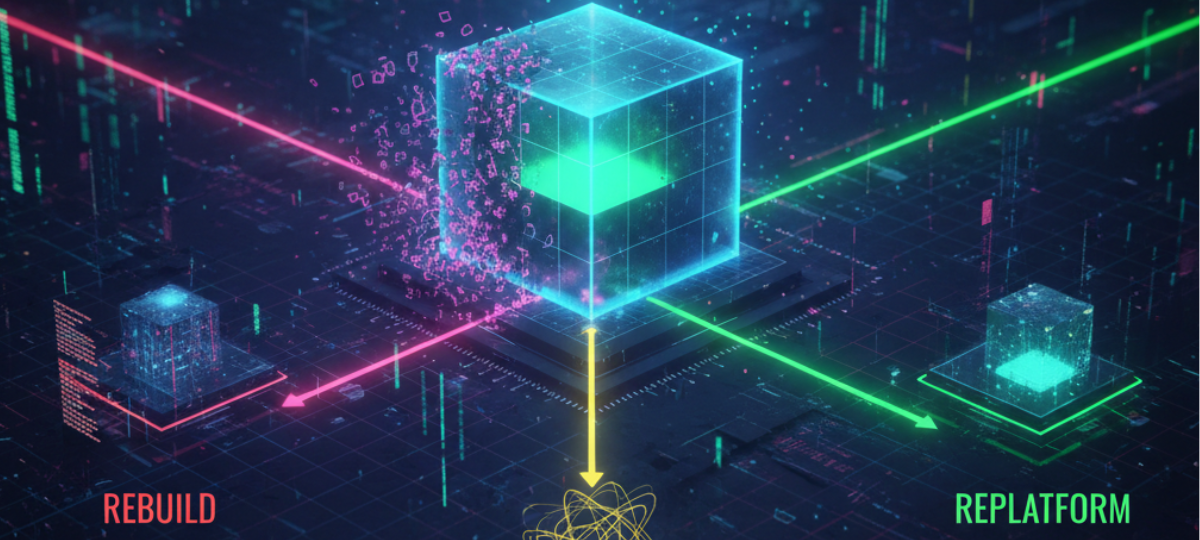

Introduction: Legacy Systems Are Now a Business Risk, Not Just a Technical One
In 2026, legacy applications are no longer just “old software.” They are a direct barrier to growth, innovation, security, and scalability.
Many enterprises still rely on legacy systems built on outdated architectures, tightly coupled codebases, and aging infrastructure. While these systems may still “work,” they increasingly struggle to support modern requirements such as:
- AI and automation
- Cloud scalability
- API-first integrations
- Security and compliance standards
- Faster time-to-market
As digital competition intensifies, organizations face a critical question:
Should we rebuild, refactor, or replatform our legacy application?
Choosing the wrong modernization path can lead to cost overruns, extended downtime, and failed transformations. This guide breaks down each approach and helps you decide the right modernization strategy for your business in 2026.
What Is Legacy Application Modernisation?
Legacy application modernisation is the process of improving existing software systems to meet current and future business needs—without losing critical functionality or data.
Modernisation typically focuses on:
- Architecture improvement
- Performance and scalability
- Maintainability and extensibility
- Security and compliance
- Integration with modern platforms
It is not a one-size-fits-all effort. The right approach depends on technical debt, business criticality, and long-term strategy.
Why Modernisation Is Urgent in 2026
Several forces are accelerating modernization decisions:
1. Cloud and AI Are Now Default Expectations
Legacy systems often cannot support AI workflows, real-time analytics, or elastic scaling without major changes. Partnering with a trusted .NET Development Company can help enterprises modernize applications and align them with cloud-first architectures.
2. Rising Maintenance Costs
Enterprises spend up to 70–80% of their IT budgets maintaining legacy applications instead of innovating. Modernization helps reduce operational overhead and redirects investment toward growth and digital transformation.
3. Security and Compliance Risks
Outdated frameworks and unsupported libraries increase vulnerability exposure and audit risk. Updating legacy systems strengthens security posture and supports evolving regulatory requirements.
4. Talent Scarcity
Finding developers for older stacks such as legacy .NET, outdated Java, and monolithic architectures is increasingly difficult, making modernization essential for long-term sustainability.
Modernisation is no longer optional—it is a strategic necessity.
The Three Core Modernisation Strategies Explained
1. Rebuild: Starting Fresh with a Modern Architecture
Rebuilding involves rewriting the application from scratch using modern technologies, architectures, and best practices.
When Rebuild Makes Sense
Rebuilding is the right choice when:
- The legacy system has extreme technical debt
- Business requirements have changed significantly
- The architecture cannot support scaling or AI
- Maintenance costs exceed the cost of rebuild
- Time-to-market is suffering badly
Benefits of Rebuilding
- Clean, future-ready architecture
- Cloud-native and API-first design
- Easier AI and automation integration
- Lower long-term maintenance costs
Risks to Consider
- Higher upfront investment
- Longer initial delivery timelines
- Requires strong product and domain understanding
Rebuilds work best when guided by experienced product engineering teams, not just development resources.
2. Refactor: Improving What Already Works
Refactoring focuses on improving the internal structure of an application without changing its external behavior.
When Refactoring Is Ideal
Refactor when:
- Core functionality is still valuable
- Architecture is workable but inefficient
- Performance and maintainability are the main issues
- You need gradual improvement with minimal risk
Benefits of Refactoring
- Lower risk than rebuild
- Faster delivery cycles
- Improved performance and stability
- Extends application lifespan
Limitations
- Cannot fix fundamental architectural flaws
- Legacy constraints may still remain
- Less flexibility for major innovation
Refactoring is often chosen for mission-critical systems where downtime is unacceptable.
3. Replatform: Modern Infrastructure Without Rewriting Everything
Replatforming moves applications to modern platforms (cloud, containers, managed services) with minimal code changes.
When Replatforming Is the Right Fit
Replatform when:
- Codebase is stable but infrastructure is outdated
- Scalability and availability are key concerns
- You want faster cloud adoption
- Budget or timelines are constrained
Benefits of Replatforming
- Faster time-to-value
- Improved scalability and reliability
- Reduced infrastructure management
- Lower operational costs
Trade-Offs
- Technical debt remains
- Limited architectural flexibility
- Future refactor or rebuild may still be needed
Replatforming is often a stepping stone, not the final destination.

Modernise Your Legacy Applications with Confidence
Unsure whether to rebuild, refactor, or replatform? Discover how the right modernization strategy can improve performance, scalability, and long-term maintainability.
Rebuild vs Refactor vs Replatform: A Strategic Comparison
Criteria | Rebuild | Refactor | Replatform |
Upfront Cost | High | Medium | Low |
Long-Term ROI | Very High | Medium | Medium |
Risk | Medium–High | Low | Low |
Speed to Market | Slow initially | Moderate | Fast |
Cloud & AI Readiness | Excellent | Limited | Good |
Technical Debt Reduction | Complete | Partial | Minimal |
How to Choose the Right Modernisation Path
The right decision depends on business context, not just technology.
Ask these questions:
- Is this application core to our future roadmap?
- Are we scaling users, data, or transactions?
- Do we need AI, automation, or real-time insights?
- How much downtime can the business tolerate?
- What is the 3–5 year vision for this system?
In many cases, the answer is not one approach, but a phased combination:
- Replatform now
- Refactor incrementally
- Rebuild critical modules later
Common Legacy Modernisation Mistakes to Avoid
- Treating modernization as a pure tech upgrade
- Ignoring business workflows and users
- Underestimating data migration complexity
- Modernizing everything at once
- Choosing tools over strategy
Successful modernization requires architecture thinking, product mindset, and execution discipline.
How MetaDesign Solutions Approaches Legacy Modernisation
At MetaDesign Solutions, we help enterprises modernise legacy applications with clear outcomes, not just code changes.
Our modernization services include:
- Legacy system assessment & roadmap creation
- Application rebuild using modern stacks (.NET, ROR, Golang, Full Stack)
- Incremental refactoring for mission-critical systems
- Cloud replatforming and DevOps enablement
- AI-ready and API-first architecture design
We work closely with stakeholders to choose the right modernization strategy, balancing risk, speed, and long-term value.
👉 Planning to modernise a legacy system in 2026?
Talk to our experts and get a clear modernization roadmap:
🔗 https://calendly.com/amit-mds
Conclusion: Modernisation Is a Strategic Investment, Not a Cost
In 2026, legacy applications are no longer just IT concerns—they are business bottlenecks.
Whether you choose to rebuild, refactor, or replatform, the key is making a deliberate, informed decision aligned with your growth strategy.
The organizations that modernise successfully will:
- Innovate faster
- Scale confidently
- Reduce long-term costs
- Attract top engineering talent
Legacy modernization is not about replacing software.
It’s about future-proofing your business.
Related Hashtags:
#LegacyModernization #ApplicationModernization #DigitalTransformation #EnterpriseSoftware #ModernSoftwareArchitecture #CustomSoftwareDevelopment #MetaDesignSolutions