

 MetaDesign Solutions
The digital infrastructure landscape of 2026 is defined by a singular realization: Vendor lock-in is no longer an acceptable technical risk. For the last decade, Google’s Firebase served as the gateway for millions of developers to build fast, scalable applications without a backend team. However, as those applications matured into enterprise-scale SaaS platforms, the limitations of “BaaS 1.0” became glaringly apparent.
In 2026, the movement toward Supabase isn’t just a trend; it is a strategic migration driven by the need for predictable billing, relational data integrity, and absolute data sovereignty. This article serves as the definitive guide for CTOs and Lead Architects looking to transition their stack to the open-source “Postgres-as-a-Service” standard.
1. The Financial Argument: The “Success Tax” of 2026
In the early days of a startup, Firebase’s “Spark” plan is a gift. But as you scale, Firebase’s usage-based billing model—specifically for Cloud Firestore—becomes a “Success Tax.”
Operations vs. Resources
Firebase bills you for every document read, write, and delete. In a high-traffic 2026 application (like a real-time collaborative tool or a high-frequency trading dashboard), your costs scale linearly with user activity.
Supabase, conversely, is built on dedicated resources. You pay for the underlying virtual machine (CPU and RAM) and the storage used.
- Firebase: You pay more every time a user refreshes a page.
- Supabase: You pay a flat monthly fee for the server; as long as the server can handle the load, 1,000 extra reads cost you $0.
2. The Sovereignty Mandate: Navigating 2026 Regulations
In 2026, “where” your data lives is as important as “how” it’s stored. The EU Data Act and the Sovereign Cloud Initiative have made it legally risky to host sensitive European or Asian citizen data on proprietary US-locked platforms.
The “Proprietary Trap” of Firebase
Firebase is a “Black Box.” You cannot export a Firebase “container” and run it on your own hardware. If Google changes their Terms of Service or if a government mandates that data must stay within a specific border, your only choice with Firebase is a complete, painful rewrite.
Supabase: Open Source and Self-Hostable
Supabase is a collection of open-source tools (PostgreSQL, GoTrue, PostgREST, Realtime) wrapped in a beautiful UI.
- Data Residency: In 2026, Supabase allows you to pin data to specific regions (e.g., Germany-West or Singapore-South) with a single click.
- The Docker Advantage: Because Supabase is open-source, you can self-host the entire stack using Docker or Kubernetes. This allows enterprises to comply with strict Air-Gapped requirements or local data laws (like China’s PIPL) that Firebase simply cannot satisfy.
3. Technical Superiority: Why Postgres Wins in 2026
The industry’s brief flirtation with NoSQL for everything has ended. In 2026, PostgreSQL is the undisputed king of the backend, and Supabase is its most accessible wrapper.
ACID Compliance vs. Eventual Consistency
Firebase’s Firestore is built for “eventual consistency.” In 2026, enterprise apps—especially in Fintech, Healthcare, and Logistics—require the ACID (Atomicity, Consistency, Isolation, Durability) guarantees that only a relational database like Postgres can provide.
Vector Search and the AI Era (pgvector)
By 2026, every SaaS is an AI SaaS. Supabase integrates pgvector natively. This allows you to store AI embeddings and perform Similarity Search directly alongside your relational data using standard SQL.
- Firebase: Requires a separate vector database (like Pinecone) or a complex integration with Vertex AI.
- Supabase: SELECT * FROM docs ORDER BY embedding <=> ‘[0.1, 0.2…]’ LIMIT 5;
4. The 2026 Migration Roadmap: Step-by-Step
Migrating from Firebase to Supabase in 2026 is no longer a manual “copy-paste” exercise. The migration ecosystem has matured significantly, and a Supabase Development Company can now execute this transition with minimal disruption and high reliability.
Phase 1: User Authentication (Auth)
One of the biggest concerns during migration is avoiding forced password resets for existing users.
Export:
A Supabase development team uses tools like supabase-community/firebase-to-supabase to export Firebase users, including their password hashes (SCRYPT).
Import:
Supabase’s GoTrue authentication server fully supports Firebase’s SCRYPT algorithm. A Supabase Development Company can import users directly into the auth.users table, allowing users to log in immediately with their existing credentials—no password reset required.
Phase 2: Database (Firestore to Postgres)
Firestore is a document-based NoSQL database, while Supabase is powered by Postgres. This phase focuses on structured data transformation.
Schema Design:
A Supabase Development Company maps Firebase Collections to Postgres Tables and Documents to Rows, ensuring relational integrity and optimized querying.
JSONB for Flexibility:
For semi-structured or evolving data, JSONB columns in Postgres provide NoSQL-like flexibility while retaining powerful SQL indexing and performance benefits.
The Migration Script:
Using modern ETL tools like Airbyte or the Supabase CLI, a Supabase development team pipelines data from Firestore to Postgres while preserving timestamps, IDs, and relationships.
Phase 3: Storage (Files and Assets)
Both Firebase Storage and Supabase Storage are built on S3-compatible backends, simplifying asset migration.
Mirroring:
A Supabase Development Company sets up automated scripts to download files from Firebase storage buckets and upload them to Supabase Storage with minimal downtime.
RLS Mapping:
In 2026, Supabase Storage leverages Row-Level Security (RLS). A Supabase development team defines SQL policies that control file access based on user roles or database relationships, ensuring secure and scalable asset management.

Shape the Future with AI-Driven Full Stack Development
Still developing applications without AI-driven capabilities? Learn how integrating artificial intelligence and machine learning into full stack development enables smarter features, predictive insights, and scalable systems without increasing complexity.
5. Security: Row-Level Security (RLS) vs. Firebase Rules
One of the most profound shifts in 2026 is the move from “Application-level security” to “Database-level security.”
The Firebase Rule Headache
Firebase rules are written in a proprietary domain-specific language (DSL). They are notoriously difficult to test and can become unmanageable as your data relationships grow more complex.
The Power of RLS
Supabase uses PostgreSQL Row-Level Security. Security logic is written in pure SQL.
Example: “Users can only see posts where they are the author OR the post is marked as public.”
SQL
CREATE POLICY “Users can view their own posts”
ON posts FOR SELECT
USING (auth.uid() = author_id OR is_public = true);
In 2026, this approach is preferred because it is declarative, testable, and performant. It ensures that even if a developer makes a mistake in the frontend code, the database itself refuses to leak data.
6. Avoiding Common Migration Pitfalls
While the transition is easier than ever, there are three “2026 traps” to avoid:
- The “Joins” Performance Trap: Developers used to NoSQL often forget to add Indexes to their new Postgres tables. Without proper indexing, your “Joins” will be slower than Firebase’s denormalized reads.
- Edge Function Cold Starts: Ensure you are using Supabase’s 2026 Deno-based Edge Functions. They have near-zero cold starts compared to the heavier Node.js functions often used in Firebase.
- Realtime Limits: Firebase’s “Listener” model is more aggressive than Supabase’s “Replication” model. For extremely chatty apps, you may need to tune your Postgres max_replication_slots.
7. Conclusion: Choosing a Future-Proof Foundation
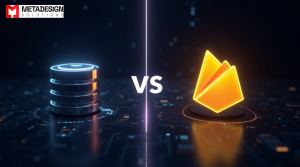
In 2026, the choice between Firebase and Supabase is a choice between convenience and control.
Firebase remains an excellent choice for rapid prototyping and hobby projects. However, for any organization concerned with long-term ROI, regulatory compliance, and technical flexibility, Supabase is the clear winner. By migrating to a Postgres-centric stack, you aren’t just changing your database; you are adopting a 40-year-old standard that will still be relevant in 2046.
The migration process is a one-time investment that pays dividends every month in the form of lower bills and higher developer productivity.
Related Hashtags:
#Supabase #Firebase #CloudArchitecture #DataPrivacy #SaaS #PostgreSQL #MigrationGuide #TechEconomics2026