

 MetaDesign Solutions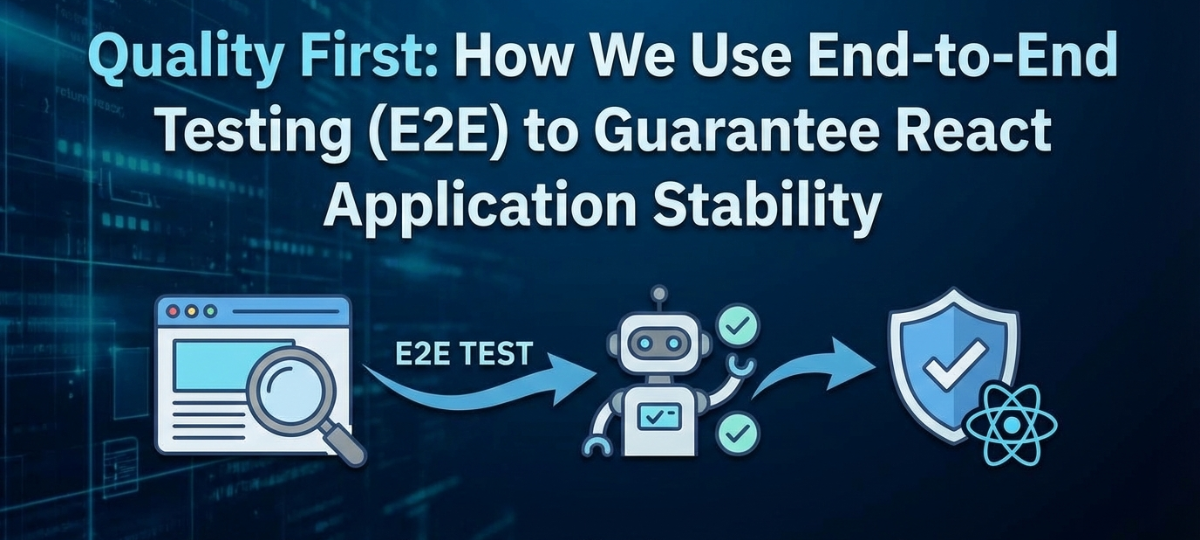

The Importance of Quality in React Application Development
In today’s fast-paced digital landscape, delivering high-quality applications that perform seamlessly across platforms is non-negotiable. As user expectations grow, so does the need for applications that not only look good but also function flawlessly.
For React applications, which are dynamic and interactive by nature, stability is paramount. A single bug or error in the user interface can lead to negative user experiences, poor retention rates, and ultimately, lower conversion rates. Therefore, ensuring React application stability through rigorous testing is crucial.
One of the most effective ways we ensure this stability is by implementing End-to-End (E2E) testing throughout the development process. E2E testing allows us to simulate user interactions with the application, from the frontend to the backend, to ensure that the app performs as expected in real-world scenarios.
1. What is End-to-End (E2E) Testing?
End-to-End (E2E) testing is a software testing methodology where the entire application, including its backend and frontend, is tested from the user’s perspective. The goal is to replicate how real users interact with the application and verify if everything works as expected when integrated as a whole.
For React applications, E2E testing helps simulate the user journey by testing:
- User interactions like clicking buttons, filling out forms, and navigating between pages.
- API calls and server interactions.
- Data persistence and state management.
- Edge cases such as slow network conditions, user errors, and more.
Tools like Cypress, Selenium, and Playwright are commonly used for E2E testing because they allow testers to automate the process of simulating user interactions, ensuring that every part of the app functions correctly.
2. Why E2E Testing is Crucial for React Application Stability
React applications are highly dynamic, with frequent updates to the user interface (UI) and interactions based on state changes. This can lead to unpredictable behaviors if not thoroughly tested. Here’s why E2E testing is crucial for ensuring React application stability:
a. Simulating Real User Interactions
Unlike unit tests that focus on individual components, E2E tests simulate real user behavior by interacting with the entire system. This means that the test environment closely resembles how users will experience the application in production. By running E2E tests, you ensure that all components of the app work together cohesively, from UI rendering to data submission.
b. Catching Integration Issues Early
In complex applications like those built with React, the integration between various components (such as UI components, APIs, databases, and state management libraries like Redux) can be tricky. E2E testing catches integration issues that might otherwise go unnoticed in isolated tests, helping developers identify potential problems early in the development cycle.
c. Detecting Critical Bugs Before Deployment
Imagine your React app is almost ready for deployment, but it has a subtle bug that causes the entire form submission process to fail when the user is connected to a slow network. E2E testing simulates such real-world conditions (like slow network speeds or unreliable servers) and ensures that critical workflows work as expected under different conditions, significantly reducing the risk of deployment failures.
d. Improving User Experience
With E2E testing, we ensure that end-users don’t encounter frustrating glitches, delays, or broken functionalities. By testing user flows end-to-end, we can confirm that users can navigate the app smoothly, from logging in to completing transactions, without hitting unexpected errors. This ensures user satisfaction and promotes higher engagement and conversion rates.
3. How We Implement E2E Testing in React Applications
Our approach to implementing E2E testing for React applications involves several key practices and steps to ensure that the app remains stable, scalable, and bug-free throughout its lifecycle.
a. Choosing the Right Testing Framework
To begin with, we choose the right testing framework for the job. Popular frameworks for React E2E testing include:
- Cypress: Known for its speed, ease of setup, and ability to handle real-time testing of frontend components.
- Selenium: A well-established tool that supports various browsers and platforms, allowing for comprehensive cross-browser testing.
- Playwright: A modern alternative to Selenium, designed to test web applications across different browsers (including Chrome, Firefox, and WebKit).
Each tool has its strengths, and we select the one that best suits the needs of the project, balancing speed, scalability, and ease of use.
b. Writing Robust Test Scenarios
For React apps, we write test scenarios that simulate typical user journeys. These tests often include:
- Login/Authentication: Verifying that users can log in with valid credentials and that error messages are triggered for invalid attempts.
- UI Interactions: Testing button clicks, form submissions, and dropdown selections to ensure that all UI elements work as expected.
- State Management: Verifying that data stored in React state or Redux is correctly passed between components and rendered on the UI.
- Backend Interaction: Ensuring that API calls return the correct data and that it’s properly displayed to the user.
c. Running E2E Tests in a Continuous Integration (CI) Pipeline
E2E testing should be integrated into the CI/CD pipeline to automatically test the application each time a new code is pushed. This ensures that each update is verified in a real-world environment before it reaches production.
For instance, after committing changes to the codebase, the CI system can automatically run the E2E test suite. If any test fails, developers are notified immediately, allowing them to resolve the issue before it impacts users.
d. Performance Testing in E2E Scenarios
As part of our E2E testing approach, we also simulate performance scenarios to verify that the React app can handle large volumes of users or slow network conditions. This ensures the application remains stable and responsive even under challenging conditions, providing a seamless user experience.

Quality First: Ensuring React Application Stability with E2E Testing
Discover how end-to-end testing helps us identify issues early, validate real user flows, and ensure reliable, high-performing React applications at scale.
4. Benefits of E2E Testing for React Application Stability
Implementing E2E testing for React applications brings several key benefits:
a. Faster Debugging and Issue Resolution
By identifying and resolving issues in the early stages of development, E2E testing reduces debugging time and ensures that only high-quality code is deployed.
b. Reduced Risk of Errors in Production
Comprehensive testing before deployment leads to fewer bugs, higher-quality releases, and reduced user-impacting issues in production. This results in a more stable application and enhanced user satisfaction.
c. Automated Testing and Continuous Validation
E2E tests are automated, ensuring that any changes made to the app don’t unintentionally break its core functionality. This also means that tests can be run regularly, providing continuous validation of the app’s stability and performance.
5. Conclusion: Ensuring Stability and Quality with E2E Testing
In the fast-paced world of React development, ensuring stability and quality is a critical aspect of delivering successful applications. By incorporating End-to-End (E2E) testing into the development process, we can guarantee that React applications are thoroughly tested from a user’s perspective. This approach not only identifies bugs and integration issues but also ensures a flawless user experience.
By using E2E testing as part of our overall testing strategy, we can deliver React applications that are reliable, fast, and secure, which ultimately leads to improved user satisfaction, business outcomes, and long-term success.
👉 Learn More About Our React Development Services and Testing Approach and see how we can help your app maintain quality and stability!
Related Keyphrase:
#ReactJS #E2ETesting #SoftwareTesting #Automation #ReactDevelopment #QualityAssurance #WebDevelopment #TestingTools #Cypress #Selenium #Playwright #WebAppTesting #ReactApps #BugFree