


 MetaDesign Solutions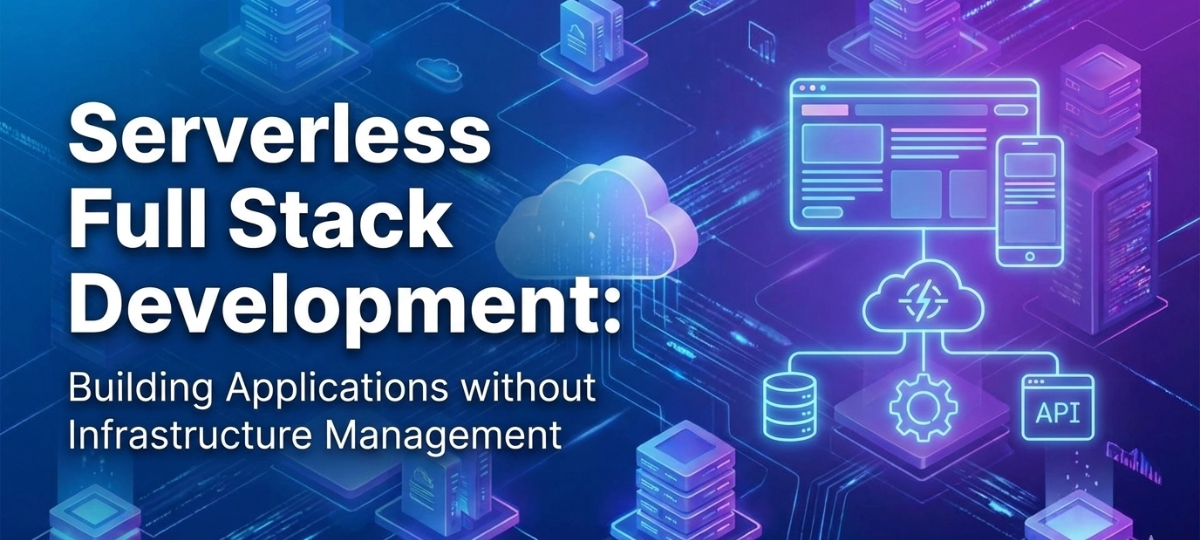

The traditional way of building web applications involves managing infrastructure, provisioning servers, and maintaining complex environments. For developers, this can be time-consuming and resource-intensive. However, the rise of serverless computing has revolutionized full-stack development, offering an elegant solution to build applications without worrying about infrastructure management.
In serverless full-stack development, developers can focus purely on building features and functionalities while leaving the underlying infrastructure concerns to cloud providers. This paradigm shifts the development approach from managing virtual machines, databases, and servers to using fully managed services and cloud functions.
In this blog, we will explore serverless full-stack development, its key benefits, architectural considerations, and how you can implement it using popular serverless platforms like AWS Lambda, Google Cloud Functions, and Azure Functions.
What is Serverless Computing?
Serverless computing is a cloud computing execution model where cloud providers automatically manage the infrastructure for application deployment. Instead of provisioning, scaling, and maintaining servers, developers can write and deploy code that runs in response to events or HTTP requests, without having to manage the actual infrastructure.
Key Characteristics of Serverless Computing:
- No Infrastructure Management: Developers don’t need to worry about provisioning, managing, or scaling servers.
- Event-Driven: Serverless applications are triggered by events (e.g., HTTP requests, file uploads, database changes).
- Pay-as-You-Go: You pay only for the compute time you use, and there are no ongoing costs for idle servers.
- Auto-Scaling: Serverless platforms automatically scale up or down based on demand, allowing for efficient resource usage.
While the term “serverless” suggests there are no servers involved, the reality is that cloud providers manage the servers and infrastructure behind the scenes. The difference is that developers don’t need to manually configure or manage this infrastructure.
Why Choose Serverless for Full Stack Development?
Reduced Operational Overhead
Serverless eliminates the need for developers to manage the underlying infrastructure. With traditional server-based architectures, you need to maintain and monitor servers, patch vulnerabilities, manage databases, and ensure high availability. With serverless, all of this is handled automatically by the cloud provider, reducing the operational burden on developers and DevOps teams.
Faster Time to Market
With serverless, developers can focus purely on business logic and feature development rather than spending time on infrastructure management. The event-driven architecture allows for faster development cycles, enabling teams to ship features and updates more quickly.
Scalability
Serverless applications can automatically scale in response to traffic and load. When demand increases, the serverless platform scales your resources up without manual intervention. Similarly, during low-demand periods, resources are scaled down automatically, which helps optimize costs.
Cost Efficiency
Serverless follows a pay-as-you-go model, where you only pay for the compute resources you use. You don’t have to pay for idle server time, which significantly reduces costs. This model makes serverless particularly appealing for startups and small businesses with limited budgets.
Focus on Business Logic
With the infrastructure abstracted away, developers can focus more on building features and adding value to the business, rather than dealing with complex infrastructure setups, scaling issues, or server configurations.

Build Scalable Apps with Serverless Full Stack Development
Learn how to leverage serverless architecture to build powerful applications without the hassle of managing infrastructure.
How Serverless Works in Full Stack Development
In serverless full-stack development, both the frontend and backend of your application interact with serverless services, creating a streamlined and efficient development workflow. Let’s break down how this works in practice.
Frontend Development
In a traditional web application, the frontend communicates with a backend server (e.g., Node.js, Django, Ruby on Rails) to retrieve and send data. With serverless, the frontend can directly call serverless functions (e.g., AWS Lambda, Google Cloud Functions) or API Gateway endpoints.
Common Frontend Technologies in Serverless:
- React.js / Vue.js / Angular: These frameworks are commonly used to build the user interface and interact with serverless backends.
- Static Site Generators: Tools like Next.js or Gatsby are ideal for generating static websites that connect to serverless functions for dynamic content.
Backend Development
In traditional full-stack development, the backend logic is hosted on a web server or application server. However, in a serverless architecture, backend functionality is implemented as serverless functions. Each function is responsible for a specific task, such as processing an HTTP request, interacting with a database, or triggering a workflow.
Components of Serverless Backend:
- Functions (AWS Lambda, Google Cloud Functions, Azure Functions): The primary backend unit in a serverless architecture. These functions are triggered by events such as HTTP requests, database changes, or file uploads. They process the logic and return responses without needing to manage infrastructure.
- API Gateway: API Gateway services like AWS API Gateway, Google Cloud Endpoints, or Azure API Management serve as the intermediary between the frontend and backend. These gateways manage API calls, route requests to the appropriate serverless functions, and provide API authentication and rate limiting.
- Databases: Serverless databases like Amazon Aurora Serverless, Firebase Firestore, or DynamoDB are commonly used with serverless applications. They provide automatic scaling and cost-effective storage.
- Event Sources: Serverless functions can be triggered by a variety of events such as HTTP requests, file uploads, database changes, and more. Common event sources include S3 (for file storage), SNS/SQS (for messaging), and CloudWatch (for monitoring).
Building Serverless Full Stack Applications
1. Frontend Development with Static Sites
One of the biggest advantages of serverless development is the ability to build static websites that load extremely quickly. Frameworks like Next.js, Gatsby, and Nuxt.js allow developers to build static sites that are deployed to CDNs for fast content delivery.
Best Practices for Serverless Frontend:
- Use static site generators to build fast, SEO-friendly websites that interact with serverless functions for dynamic content.
- Leverage CDNs (e.g., Cloudflare, AWS CloudFront) to serve static assets, ensuring that users around the world get quick access to your content.
2. Backend Development with Serverless Functions
For the backend, you’ll primarily use serverless functions to implement various business logic. These functions are scalable, cost-effective, and can be written in JavaScript, Python, Go, or other languages supported by serverless platforms.
Steps to Implement Serverless Backend:
- Write Functions: Create serverless functions to handle tasks like user authentication, data processing, or communication with other services.
- Set Up API Gateway: Use AWS API Gateway or Google Cloud Endpoints to expose your serverless functions to the frontend via HTTP endpoints.
- Use Serverless Databases: Connect your serverless functions to databases like DynamoDB, Firebase, or Aurora Serverless to store and retrieve data.
- Deploy and Scale Automatically: Deploy your functions and let the cloud provider automatically scale them based on demand.
3. Authentication and Authorization
Authentication in a serverless full-stack application can be efficiently handled with services like AWS Cognito, Firebase Authentication, or Auth0. These services integrate easily with both frontend and backend components.
How Authentication Works in Serverless:
- Frontend: The user interacts with a login form in the frontend. Upon successful login, an authentication token (such as a JWT) is generated.
- Backend: The token is sent to a serverless function, which validates the token using services like Cognito or Firebase Auth, ensuring that the user is authenticated before accessing protected resources.
4. Data Storage and Management
Serverless applications often rely on serverless databases for efficient data management. These databases can scale automatically to accommodate fluctuating data loads.
- DynamoDB (AWS): A NoSQL database that scales automatically and is perfect for high-performance applications.
- Firestore (Firebase): A NoSQL cloud database that also scales automatically and is ideal for real-time applications.
- Aurora Serverless (AWS): A relational database that adjusts its capacity based on demand, making it ideal for applications that experience variable traffic.
Best Practices for Serverless Full Stack Development
1. Minimize Cold Starts
Cold starts refer to the time it takes for serverless functions to start executing when they haven’t been used for a while. This can lead to slower response times for the first request after a period of inactivity.
How to Minimize Cold Starts:
- Use small functions to keep initialization time low.
- Warm-up strategies: Implement functions that periodically call your serverless functions to keep them warm.
- Leverage containers (AWS Lambda supports container images) to avoid cold start issues in some cases.
2. Optimize Costs
While serverless platforms are cost-effective, they require careful optimization to avoid unnecessary costs. Serverless platforms charge based on the execution time of functions, so it’s important to minimize function execution time and avoid over-provisioning.
Cost Optimization Tips:
- Write efficient code to minimize function execution time.
- Use serverless databases that scale based on demand and don’t require fixed provisioning.
- Use free-tier offerings wherever possible, especially for small-scale applications.
3. Monitor and Test
Use logging and monitoring tools to keep track of function performance, errors, and resource consumption. Services like AWS CloudWatch, Google Stackdriver, and Azure Monitor provide real-time monitoring and alerting.
Testing in a Serverless Environment:
- Use unit testing and mocking for serverless functions.
- Implement integration testing with tools like AWS SAM (Serverless Application Model) or Serverless Framework for easier testing in a local environment.
Challenges in Serverless Full Stack Development
While the benefits of serverless architecture are clear, developers should be aware of the potential challenges that come with adopting this model:
- Vendor Lock-in: Serverless platforms are tightly integrated with specific cloud providers, which can make it difficult to migrate to another provider.
- Cold Start Latency: Some applications may experience delays due to cold starts, which can affect user experience.
- Complex Debugging: Debugging serverless applications can be challenging, as the traditional concept of logs and stacks is different in serverless environments.
- State Management: Serverless functions are stateless by nature, so you need to handle session management and state outside of the functions (e.g., using a database or cache).
Conclusion
Serverless full-stack development is changing the way developers build applications by eliminating the need for manual infrastructure management, offering better scalability, and enabling rapid application delivery. With the combination of frontend frameworks like React or Vue.js and serverless backend services like AWS Lambda, Google Cloud Functions, and Azure Functions, developers can create highly responsive, scalable, and cost-effective web applications.
In 2026, serverless will continue to play a critical role in the evolution of modern web development. By adopting best practices, optimizing costs, and leveraging the power of serverless technologies, full-stack developers can build next-generation applications that are fast, efficient, and highly scalable without the complexities of infrastructure management.
#ServerlessDevelopment #FullStackDevelopment #AWSLambda #Serverless #WebDevelopment #CloudComputing #ServerlessArchitecture #AppDevelopment #NextGenApps